
Tennessee LSAs Are Worth It Once You Track Cost Per Customer
A data-driven look at when Google Local Services Ads generate booked jobs versus wasted spend for Tennessee service businesses.

- Google Local Services Ads charge per booked lead, not per click, making them cost-efficient for urgent Tennessee service categories like HVAC and plumbing.
- The Google Guarantee badge measurably increases call rates by substituting for trust a prospect hasn't built through reviews yet.
- LSA cost per lead is not the same as cost per customer—dividing lead cost by close rate reveals whether the channel is actually profitable.
- Speed-to-lead response time determines close rate more than targeting quality, so leads must be called back within minutes, not hours.
- Pipeline tracking that connects LSA leads to closed jobs is what turns a mediocre account into a strong one without raising ad spend.
Are Google Local Services Ads worth it for a Tennessee business? The honest answer depends on what you're measuring — and most owners running LSAs are measuring the wrong thing. LSAs win when judged on booked jobs and cost per lead; they look mediocre when judged on impressions or clicks, which is exactly the trap operators fall into without a pipeline-tracking system underneath the ads.
This matters more in Tennessee than the national averages suggest, not because the platform behaves differently here, but because the mix of service categories Google supports well — HVAC, plumbing, electrical, roofing, legal, home care — happens to overlap heavily with what drives local commercial activity in Nashville, Memphis, Knoxville, and Chattanooga. A humid summer HVAC season in Middle Tennessee or a winter plumbing spike in the Cumberland Plateau creates the kind of urgent, high-intent local search behavior LSAs are built to capture. The question isn't whether the channel works — it's whether you've built the measurement and follow-up infrastructure to make it pay off.
Local Services Ads Are Pay-Per-Lead, Not Pay-Per-Click
LSAs charge you when a prospective customer calls or messages through the ad, not when they click it. That single mechanic is why LSAs consistently outperform standard Paid Media search campaigns on cost efficiency for local service categories — you're not paying for window shoppers, and you're not funding a click that bounces off a landing page without ever reaching a human.
The trade-off is that Google's lead-scoring algorithm decides which leads are "valid" and eligible for dispute, and that algorithm is opaque. A Nashville plumbing company can get charged for a lead that never should have qualified — wrong service area, spam call, a homeowner asking about a service the business doesn't offer — and recovering that spend requires an active dispute process, not a passive one. Businesses that never dispute invalid leads are, in effect, subsidizing Google's targeting errors. This is an operational cost most owners don't budget for until they see the dispute-eligible percentage in their monthly report, and by then the wasted spend has usually been compounding for months.
Google Guarantee Badge Effect On Local Trust
The Google Guarantee badge — the green checkmark that appears next to LSA listings after you pass a background check and licensing verification — measurably increases click-through and call rates versus unbadged local competitors, because it substitutes for a review a prospect hasn't read yet. For home service and professional service categories where trust is the primary buying barrier, that badge does real work at the exact moment a homeowner is comparing three unfamiliar businesses in a five-second decision window.
For a Knoxville home care agency or a Chattanooga HVAC contractor, this badge effect compounds with your existing review volume rather than replacing it — a business with 4.8 stars and the badge outperforms a business with either alone. It's also non-transferable positioning: your competitor can copy your ad copy, but they can't fake the verification, which makes it one of the few genuinely defensible signals available in a crowded local market. That defensibility matters most in categories where every competitor is running the same paid search playbook and the badge becomes the tiebreaker.
What Determines Whether LSAs Are Worth It For Your Business
Three variables decide the answer, and none of them are "how good the platform is." First: your close rate on inbound calls. Second: your average job value and repeat/referral rate. Third: whether you have a speed-to-lead process fast enough to convert a pay-per-lead call before a competitor does.
Run the math on your own numbers before committing spend. If your close rate on qualified LSA leads is 25% and your average ticket is $450, a lead costing $30–$60 (typical range varies significantly by category and metro competitiveness) produces a return that beats most alternative channels — but only if every lead gets called back within minutes, not hours. Businesses that let LSA leads sit in a voicemail queue for two hours are paying premium pay-per-lead rates for a conversion rate that belongs to a far lower-cost channel, because slow response time destroys close rate faster than any targeting inefficiency does.
The math most owners skip
LSA cost-per-lead is not your cost of customer acquisition. CAC = lead cost ÷ close rate. A $50 lead at a 15% close rate costs you $333 per customer — track that number monthly, not the lead cost alone, or you'll misjudge whether the channel is actually profitable.
Tennessee Service Categories Where LSAs Perform Best
LSAs aren't uniformly strong across every business type Google supports. They perform best where three conditions overlap: the service is urgent or time-sensitive, the purchase decision happens with minimal comparison shopping, and the job value is high enough to absorb a pay-per-lead cost without eroding margin.
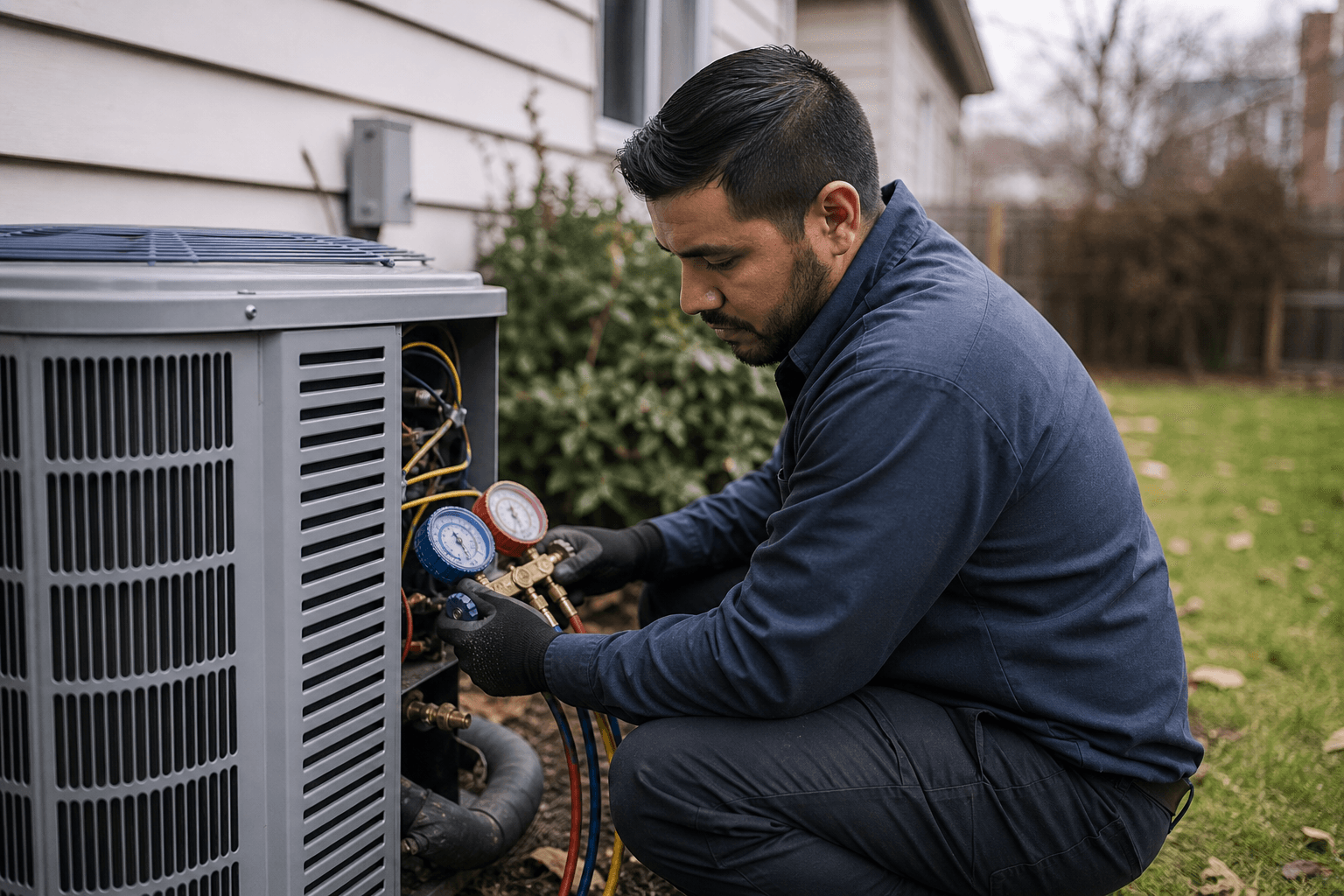
HVAC, plumbing, electrical, garage door, and locksmith services in Nashville and Memphis fit that profile well — a broken AC unit in July doesn't wait for three quotes. Legal services (family law, personal injury) and financial services (tax prep, financial planning) fit differently: lower urgency, longer consideration, but very high per-customer value, which still clears the math even at a higher cost per lead. Categories that struggle are lower-ticket, low-urgency, highly comparison-shopped services where the pay-per-lead cost outpaces what a single job is worth — that's a spreadsheet exercise specific to your business, not a category-wide verdict. If you're unsure which bucket your category falls into, the fastest way to find out is to run a small test budget and pressure-test the close rate before committing a full monthly spend to the channel.
Pipeline Tracking Is What Makes The Spend Defensible
An LSA dashboard tells you leads and spend. It does not tell you which of those leads became a signed job, what that job was worth, or which ones should have been disputed. Without a CRM connection that closes that loop, you're optimizing a vanity metric — lead volume — instead of the number that actually matters to your bank account.
This is the gap that turns a mediocre LSA account into a strong one without changing the ad spend at all. A Chattanooga roofing company running $2,500/month in LSA spend with no attribution back to closed jobs is flying blind on ROI; the same business with lead-to-close tracking can identify which service areas, times of day, and lead types actually convert, then shift budget toward what works. That shift alone — reallocating spend toward the segments that already prove out, rather than spreading it evenly — is often the single highest-leverage change available to an LSA account that's plateaued. See how this plays out across paid channels in our results breakdown.
Should You Run LSAs Alongside Standard Search Ads?
Yes, in most local service categories — the two channels capture different intent stages and rarely cannibalize each other's spend. LSAs capture the "I need this now, show me someone trustworthy" search, while standard Google Search and paid media campaigns capture broader research-stage queries, retargeting, and geographic expansion beyond what LSA's radius-based targeting allows.
Running both also gives you a data cross-check: if standard search converts at 8% and LSA converts at 20%, that's a signal about lead intent quality, not just channel performance, and it should inform where your next incremental dollar goes. Businesses that treat LSA as a replacement for a full-funnel paid strategy usually plateau once they hit their metro's lead-volume ceiling — Nashville and Memphis are large markets, but LSA impression share is finite, and growth beyond that ceiling requires a second demand channel. Building that second channel before you hit the ceiling, rather than after, is what keeps pipeline growing instead of flattening out for a quarter while you scramble to stand up a new source of demand.
The Real Answer To Whether LSAs Are Worth It
LSAs are worth it in Tennessee when three things are true: your category has urgency or high ticket value, your team can respond to leads in minutes, and you're tracking cost per closed customer rather than cost per lead. Absent any one of those, the channel underperforms — not because Google's targeting failed, but because the operational infrastructure around it wasn't built to convert what it delivers.
That infrastructure gap is the actual decision point, and it's rarely solved by adjusting bids. It's solved by building the tracking, dispute, and speed-to-lead processes that turn a pay-per-lead account into a pipeline-generating one. If you're running LSAs on gut feel instead of closed-revenue data, that's the first thing worth fixing before you spend another dollar — read more in our insights library, or book a free 30-minute audit to see where your current spend is actually landing.
Prefer it done for you? This playbook is our Paid Media engine: see how we run it for clients →
Frequently asked questions.
Are Google Local Services Ads worth it for a Tennessee small business?
They're worth it when your category has urgency or high ticket value, your team responds to leads within minutes, and you track cost per closed customer rather than cost per lead. Absent any of these, the channel tends to underperform even though the platform itself is working as designed.
How much does a Local Services Ads lead cost in Tennessee?
Lead costs vary significantly by service category and metro competitiveness, with Nashville and Memphis generally more competitive than smaller markets. What matters more than the sticker price is your close rate—a $50 lead at a 15% close rate costs $333 per customer, and that number should be tracked monthly.
Can you dispute invalid leads on Google Local Services Ads?
Yes, Google allows businesses to dispute leads that fall outside their service area, are spam, or request a service they don't offer. Businesses that never actively dispute ineligible leads are effectively absorbing Google's targeting errors as wasted spend.
Should Tennessee businesses run LSAs alongside standard Google Search ads?
In most local service categories, yes, because the two channels capture different stages of intent and rarely compete for the same spend. LSAs capture urgent, ready-to-book searches, while standard search and paid media campaigns cover broader research-stage queries and geographic expansion beyond LSA's radius targeting.